
Published on October 19, 2025
Coliform Bacteria Found in Your Well Water: What It Means and What to Do
Getting a positive coliform bacteria result on your well water test is alarming. Before you panic, here's what it actually means, how serious it is, and exactly what to do next.
What Is Coliform Bacteria?
"Coliform" is an umbrella term for a group of bacteria commonly found in soil, surface water, and the digestive tracts of animals and humans. A positive total coliform test means bacteria are present — but doesn't necessarily tell you where they came from or how dangerous they are.
The critical distinction is whether E. coli was detected:
-
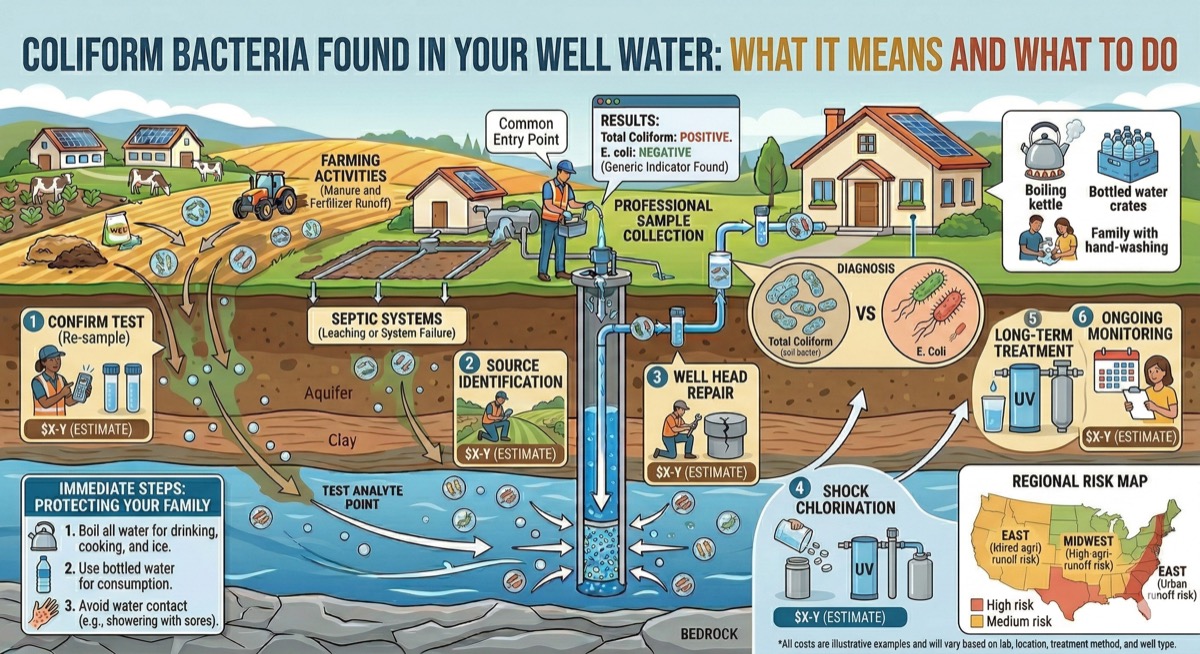
Total coliform positive, E. coli negative — Bacteria are present, but not necessarily from fecal contamination. Could be from soil bacteria entering the well, surface water intrusion, or biofilm in pipes. Serious, but less urgent than E. coli.
-
E. coli positive — Fecal contamination is confirmed. This is a direct health risk requiring immediate action. Do not use the water for drinking, cooking, or brushing teeth until resolved.
What Are the Health Risks?
Total coliform (no E. coli): Generally indicates a pathway for contamination exists. Not necessarily immediately dangerous, but needs to be fixed.
E. coli: Can cause severe gastrointestinal illness — diarrhea, vomiting, stomach cramps. Particularly dangerous for young children, elderly people, pregnant women, and immunocompromised individuals. Some E. coli strains (like O157:H7) can cause life-threatening illness.
Common Causes of Coliform Contamination in Wells
- Cracked or damaged well casing — Surface water bypasses the protective casing
- Loose or damaged well cap — Insects, small animals, or surface runoff enter the well
- Flooding or heavy rain — Surface water overwhelms the seal
- Nearby septic system — Too close to the well, or failing
- Agricultural runoff — Livestock waste reaching the water table
- Old or improperly constructed well — Lack of proper grout seal allows surface water intrusion
What to Do Immediately
1. Stop using the well water for drinking and cooking Use bottled water until the problem is resolved and a clean test confirms it.
2. Don't assume it's a false positive Lab errors happen, but treat the result as real until you know otherwise.
3. Call your county health department Most county health departments offer free guidance on well contamination. They can help you understand results and may offer free re-testing.
4. Inspect your well Look for obvious problems: damaged cap, cracks in the casing, floodwater nearby, changes to the surrounding land. Call a licensed well contractor if you suspect structural issues.
5. Disinfect with shock chlorination This is the standard first response for bacterial contamination. Your health department or a well contractor can walk you through the process. After chlorination and flushing, re-test before resuming use.
6. Re-test After disinfection and flushing, submit a new sample to a find a lab. Do not drink the water until you have a clean result.
If Bacteria Keep Coming Back
Recurring positive tests suggest an ongoing pathway for contamination — not just a one-time event. Possibilities include:
- A structural problem with the well that needs repair
- A nearby septic system that's too close or failing
- An underground source of contamination
At this point, a licensed well contractor and possibly a hydrogeologist should be involved.
Prevention Going Forward
- Test annually — bacteria are the most common and most changeable contaminant
- Inspect the well cap and casing seasonally
- Keep potential contamination sources (septic systems, livestock areas, fuel storage) as far from the well as regulations and your property allow
- Test after any flooding, well work, or nearby construction
Need to test or re-test your well for bacteria? Find a certified lab near you using our directory. Many offer rush turnaround for urgent situations.