
Published on July 21, 2025
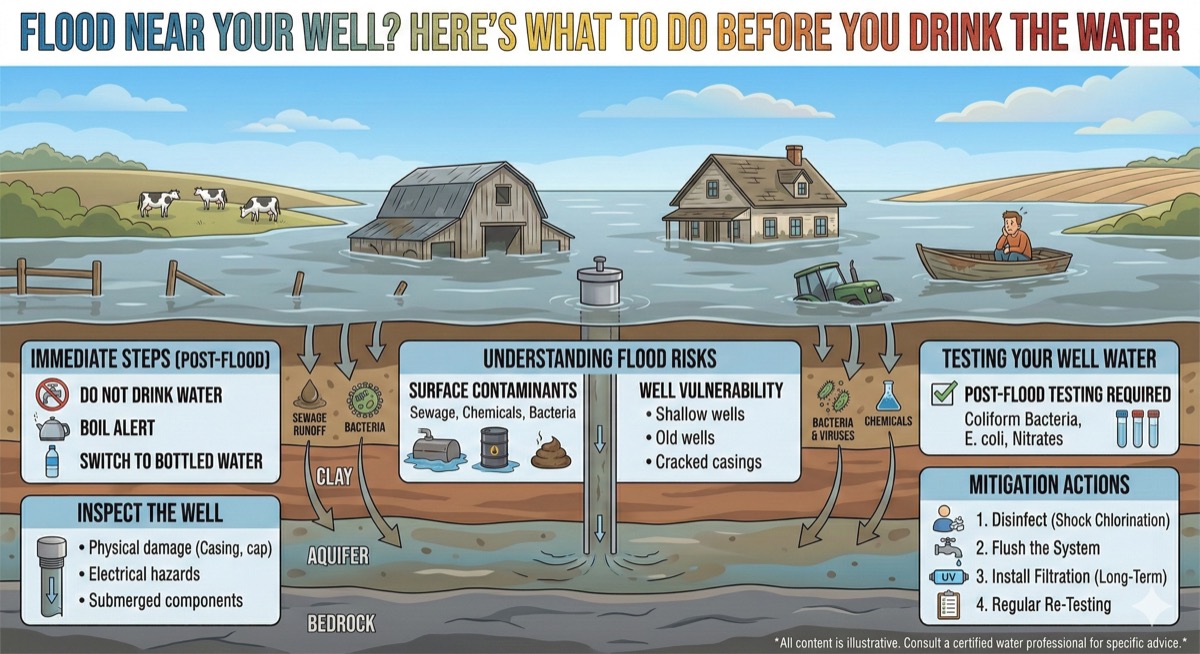
Flood Near Your Well? Here's What to Do Before You Drink the Water
Flooding is one of the fastest ways to contaminate a private well. Surface water carries coliform bacteria, sewage, agricultural runoff, and chemicals — and when it reaches your well casing, it can get inside. The problem: your water may look and smell completely normal afterward.
Here's what to do.
Step 1: Don't Use the Water Until You Test
This is the most important step. After a flood that affected your well area, assume the water is unsafe until you prove otherwise. Use bottled water for drinking, cooking, brushing teeth, and making baby formula.
If your well was submerged, had floodwater reach the top of the casing, or had the pump house inundated — treat it as contaminated.
Step 2: Inspect the Well
Before testing, do a visual inspection:
- Check the well cap — is it intact, undamaged, and sealed?
- Look for debris, silt, or sediment around the wellhead
- Check for any obvious damage to the casing or electrical components
- If the pump is submerged, it will need to be inspected by a well contractor before use
Don't run the pump if it was submerged — you risk burning out the motor.
Step 3: Pump Out the Floodwater
Once the flood has receded and your well is accessible, run the pump until the water runs clear. This purges the standing water that entered during the flood. Don't use this water — let it drain somewhere it won't cause problems.
Step 4: Disinfect the Well
After pumping clear, most health departments recommend shock chlorination — introducing a controlled amount of chlorine bleach into the well to kill bacteria. Your county health department or a well contractor can walk you through the process. Instructions vary by well depth and diameter.
After chlorination, run water at all taps until you smell chlorine, then let it sit for 12–24 hours. Then flush thoroughly until the chlorine smell is gone.
Step 5: Test the Water
After disinfection and flushing, collect a sample and send it to a find a lab. At minimum, test for:
- Coliform bacteria / E. coli — the primary post-flood concern
- nitrates — if you're in an agricultural area
- Turbidity — cloudiness indicating suspended particles
Depending on what was in the floodwater (proximity to septic systems, farms, chemical storage), you may also want to test for:
- Fecal coliform
- VOCs (VOCs)
- Agricultural chemicals
Don't resume drinking the water until results come back clean. If bacteria are detected, repeat disinfection and re-test.
Step 6: Keep Records
Document the flood event, your disinfection steps, and your test results. This is useful if you have issues later, and may be required for any insurance claims.
When to Call a Professional
Call a licensed well contractor if:
- The pump was submerged
- You see physical damage to the casing
- You've disinfected twice and bacteria are still present
- You're not comfortable performing shock chlorination yourself
Need to test your well after a flood? Find a certified lab in your state using our directory — many offer expedited testing for urgent situations.